Why Choose a Wire Extruder Machine for Cable Production?
Choosing the right equipment is not merely a purchasing decision for a cable manufacturer. It directly influences insulation quality, production speed, material usage, and long-term operating costs. A Wire Extruder Machine forms the protective layer around conductors with controlled heat, pressure, and cooling. That control matters on every production run.
In practical cable plants, operators watch melt temperature, screw speed, line tension, and cooling-water stability. Small variations matter. A temperature change can affect wall thickness, surface finish, or adhesion. Modern machines often provide synchronized controls, precise dies, and inline monitoring. These features help teams reduce waste and maintain consistent cable dimensions. They also support safer, more repeatable production when properly installed and maintained.
However, no machine solves every production problem. The wrong screw design, unsuitable tooling, or weak operator training can reduce expected performance. That reality deserves attention. A reliable choice begins with the cable material, conductor size, insulation compound, output target, and factory conditions. Experienced manufacturers compare technical specifications with actual production needs, rather than trusting attractive speed claims alone. They also examine service access, spare-part availability, energy consumption, and commissioning support.
A well-selected Wire Extruder Machine can improve efficiency while protecting product consistency. Still, performance depends on disciplined setup and continuous inspection. The most dependable results come from equipment, people, and process working together. This guide examines those practical reasons and the limitations buyers should consider before investing.
What Is a Wire Extruder Machine?
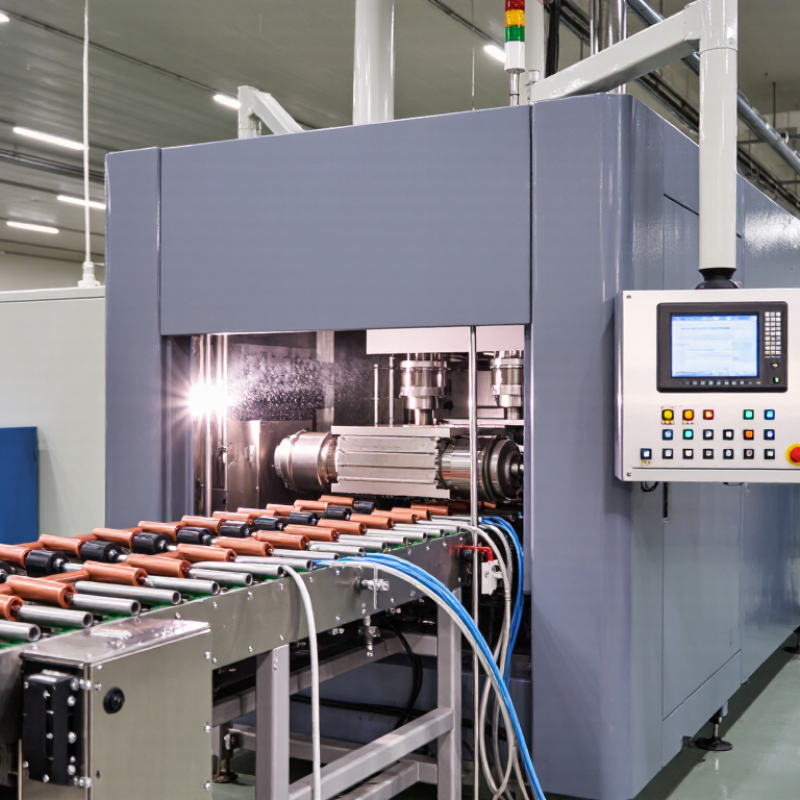
A wire extruder machine is industrial equipment that applies a continuous polymer layer around a metal conductor. It does not simply “paint” plastic onto the wire. A motor drives polymer pellets into a heated barrel, where controlled heat and pressure turn them into a uniform melt. The softened material then passes through a crosshead die surrounding the moving conductor.
Inside the machine, several parts work together. The payoff feeds copper or aluminum wire at a steady speed. The screw controls material flow, while heaters maintain separate temperature zones. A sizing die shapes the insulation, and a cooling trough sets its final surface. Sensors can check diameter, temperature, and line speed during production. Small changes matter. A slight temperature shift may create bubbles, uneven insulation, or poor adhesion.
From practical production experience, stable tension is as important as extrusion speed. If the conductor wanders through the die, the insulation becomes thicker on one side. That defect may remain invisible until testing. It is not a magic box. Operators still need suitable polymer settings, clean tooling, and regular calibration. Choosing this machine can support continuous cable production, but its performance depends heavily on material preparation and process control. One detail is easy to underestimate: cooling water that is too warm can leave the insulation soft, even when the extrusion temperature looks correct.
How Does the Wire Extrusion Process Work?
How Does the Wire Extrusion Process Work?
A wire extruder machine begins with a cleaned conductor entering through a guided pay-off system. The conductor passes through a preheater, which improves polymer adhesion and reduces surface moisture. Inside the barrel, rotating screws melt insulation pellets at controlled temperatures. Pressure then pushes the melt through a crosshead die around the moving wire. Cooling follows in a water trough, while laser gauges check diameter continuously. Small temperature changes can create visible thickness variation. This is where practical experience matters.
Grand View Research estimated the global wire and cable market at about USD 216.65 billion in 2023. The report also projects continued growth through 2030. The International Energy Agency reported that annual grid investment may need to exceed USD 600 billion by 2030. These figures support demand for stable, efficient cable production. However, market growth alone does not justify every machine purchase. A poorly matched screw design can waste resin, energy, and production time.
Tips: Match the screw and die to the insulation material. Keep melt temperature records for every shift. Check concentricity, not only outer diameter. Use calibrated gauges and inspect the first meters of each run. Cooling water must remain clean and steady. Operators should also review scrap data weekly. The numbers may reveal a setup problem that experience overlooks. Sometimes, slower extrusion gives better results. That deserves testing.
Which Materials Can Wire Extruders Process?
A wire extruder machine can process many insulation and jacketing materials, depending on its screw design and temperature control. PVC remains common because it offers balanced flexibility, electrical insulation, and cost efficiency. Polyethylene provides low moisture absorption and reliable high-frequency performance. Cross-linked polyethylene, or XLPE, supports higher temperature applications after controlled curing.
Other materials need more careful handling. TPU creates flexible, abrasion-resistant jackets for moving cables and industrial wiring. Nylon can improve toughness, but it often requires thorough drying before extrusion. Fluoropolymers resist heat and chemicals, yet they demand precise temperature management and specialized tooling. Recycled compounds may also be usable, but their melt flow can vary between batches. That inconsistency deserves attention.
Tips:
Match the screw, die, and cooling system to the material. Check resin moisture before production. Keep a record of melt temperature, line speed, and surface appearance. A smooth cable may still hide weak adhesion. Inspect cross-sections regularly. Small adjustments matter.
In practice, no material behaves perfectly on every machine. PVC may become brittle after excessive heating. TPU may stick when cooling is uneven. Operators should test short production runs before committing to long runs. Material suppliers’ technical data is useful, but real process trials remain essential.
What Are the Main Benefits for Cable Production?
A wire extruder machine can improve cable production by applying insulation evenly around the conductor. In a well-tuned line, the screw melts polymer steadily, while the die controls the coating shape. This helps maintain stable insulation thickness and cable diameter. Operators can monitor temperature, pressure, and line speed during production. Small adjustments often prevent larger defects later.
The main benefit is consistency. Uniform insulation supports reliable electrical performance and reduces rejected lengths. A controlled extrusion process can also reduce material waste, especially when startup settings are recorded carefully. Faster line speeds may increase output, but speed alone is not enough. Cooling, tension, and conductor cleanliness still matter. It is not a magic solution. Poor calibration can create bubbles, uneven surfaces, or weak bonding. Periodic checks with a diameter gauge and spark tester improve process confidence. Production teams should also compare actual material use with the planned consumption. The numbers may reveal hidden losses.
Tips: Keep the die centered, clean the feed area, and record each successful setting. Check samples from the beginning, middle, and end of a reel. Train operators to notice surface changes early. A practical improvement is often small. Consistent maintenance matters more than impressive speed.
Why Choose a Wire Extruder Machine for Cable Production?
A wire extruder provides continuous material forming, accurate metering, and flexible processing for common cable insulation and jacketing materials. The chart shows typical processing temperature windows used in cable extrusion.
Continuous Production
Extrusion forms insulation or jacketing in a continuous operation, supporting long cable runs and stable output.
Dimensional Control
Controlled screw speed, melt pressure, and die sizing help maintain consistent insulation thickness.
Material Flexibility
One extrusion platform can process different thermoplastic materials by adjusting temperature and line settings.
Efficient Material Use
Accurate metering and inline cooling can reduce over-insulation, rework, and production scrap.
Temperature ranges are approximate industry processing windows; the correct setting depends on resin grade, formulation, screw design, die geometry, and line speed.
How Do You Choose the Right Wire Extruder Machine?
Choosing the right wire extruder machine starts with the cable, not the machine’s advertised speed.
Define the conductor material, insulation type, diameter range, and required layer thickness. A machine for soft PVC may not handle high-temperature polymers consistently. Ask whether the screw design suits your material. Small details matter.
Check output stability during real production.
The extruder should maintain steady pressure, temperature, and diameter when line speed changes. An automatic control system helps, but it cannot fix poor calibration. Request trial data using your actual material and conductor size. Measure surface finish, concentricity, and scrap rates. Do not rely only on sample photographs.
Cooling length, capstan control, die access, and take-up tension also deserve attention. Operators need clear controls and safe access for cleaning. Maintenance should be practical, with commonly available wear parts. In my experience, difficult die changes quietly reduce production time. That cost is easy to miss.
Budget matters, but total operating cost matters more.
Compare energy use, material waste, maintenance hours, and training needs. A faster line may create more rejects if process control is weak. I have seen teams choose maximum speed too early. That decision looked efficient, but it increased adjustment work. Leave room for future cable sizes, although oversized equipment can waste energy and floor space. A careful factory trial usually reveals more than a sales specification.