


Design and application of seamless smooth aluminum sheathed cable
Introduction
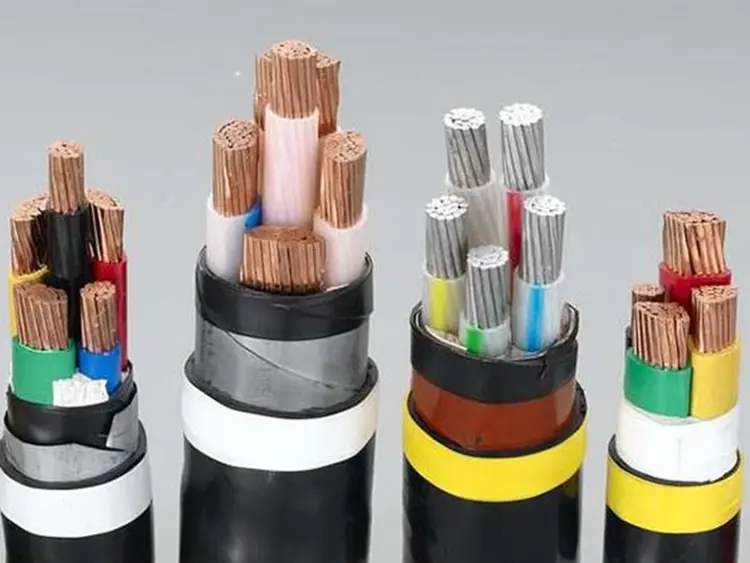
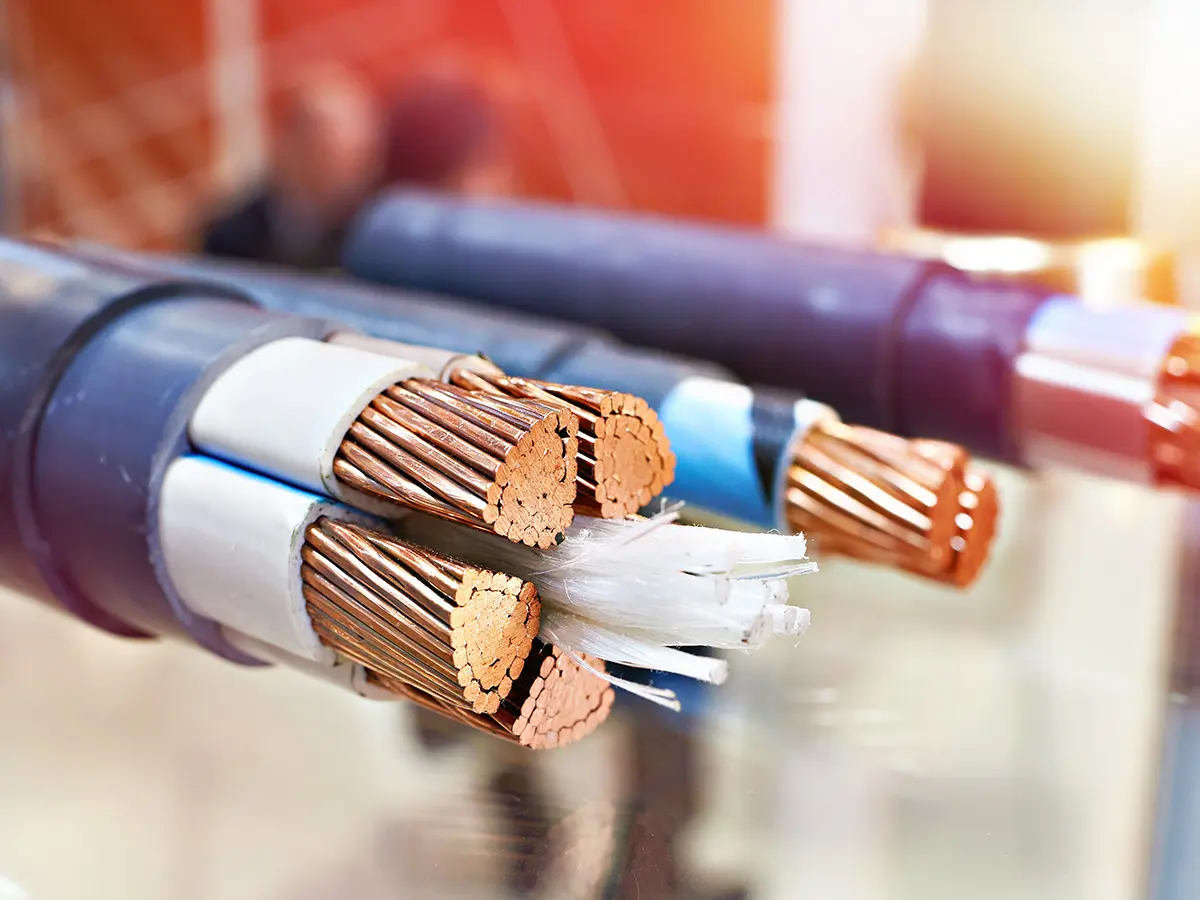
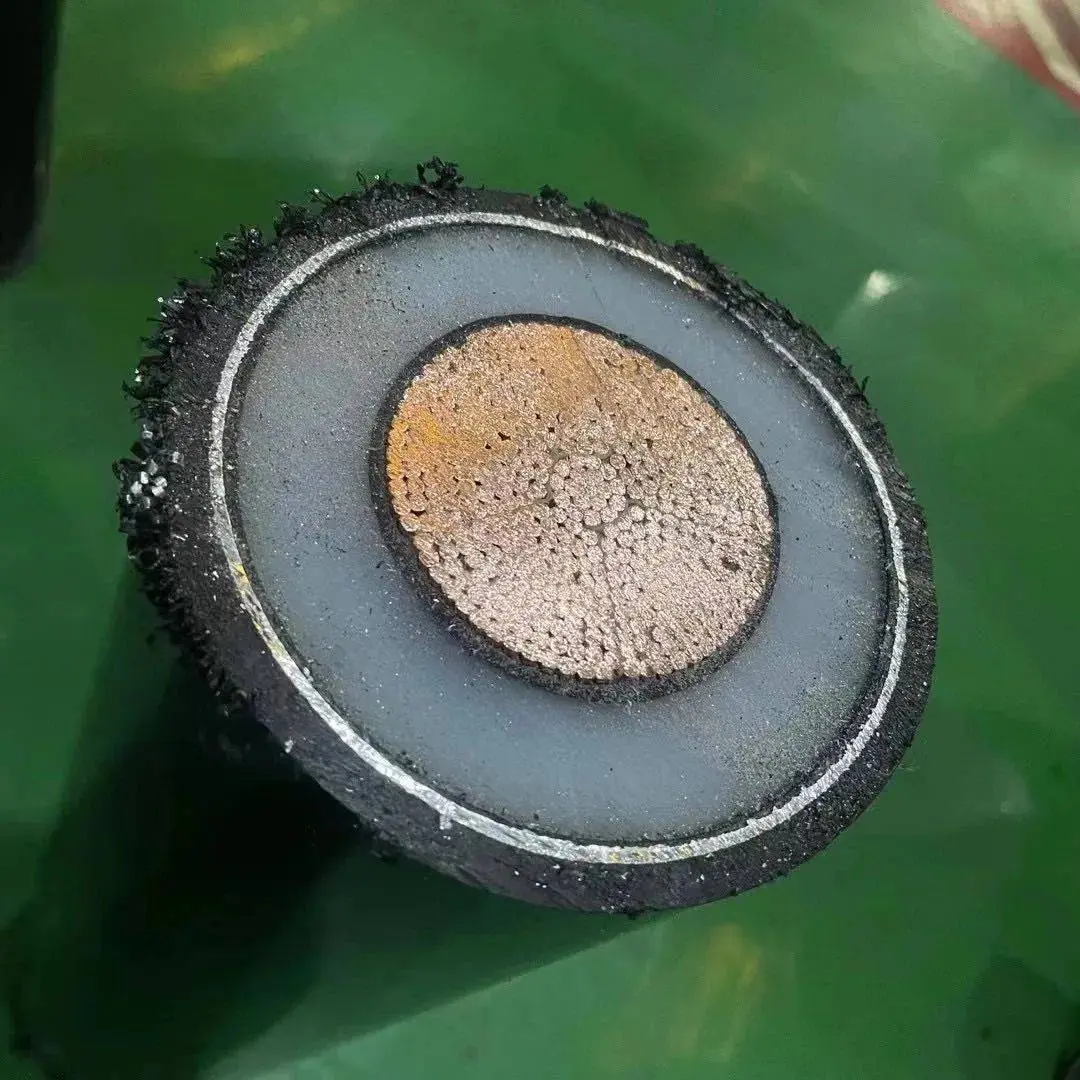
The reliability of high-voltage power cable operation is an important guarantee for the safety of the power grid. However, in recent years, high-voltage corrugated aluminum sheathed cables operating in power transmission systems in many places have repeatedly suffered from electrical corrosion. In severe cases, they will cause cable breakdown, posing serious hidden dangers to the safe operation of the power grid. Against this background, a new type of composite smooth aluminum sheathed cable product came into being. The cable has a compact structure, and the outer sheath and the aluminum sheath are bonded into a whole. However, this type of composite smooth aluminum sheathed cable in China is basically produced by argon arc welding, commonly known as seamed smooth aluminum sheath. Since the aluminum sheath produced by argon arc welding has a weld seam, if the weld seam surface is slightly uneven, the weld seam bulges inward, and there is a risk of crushing the outer shield or insulation after drawing and tightening. In order to further improve the quality of smooth aluminum sheaths, innovative designs have been made for seamless smooth aluminum sheathed cables and their production processes, realizing process innovations for seamless and smooth inner and outer surfaces of smooth aluminum sheaths. The seamless smooth aluminum sheath is in close contact with the cable buffer layer, with a large contact area, which can effectively prevent the discharge phenomenon caused by poor contact of the cable buffer layer, avoid discharge erosion inside the cable, and ensure the long-term operation safety of the cable.
1. Seamless aluminum sleeve extrusion process design
1.1 Process plan and production line design
In order to optimize the quality of welded smooth aluminum sheaths, on the basis of the production process of welded smooth aluminum sheathed cables, according to the continuous coating seamless corrugated aluminum sheath technology that has been developed and mastered, combined with the integrated continuous production characteristics of smooth aluminum sheathed cables, a new seamless smooth aluminum sheathed cable production process has been designed and developed to eliminate the risk of internal protrusions in argon arc welding welds and achieve seamless and smooth quality improvement of the inner surface of the smooth aluminum sheath.
1) Process scheme determination. The production line configuration required for the seamless smooth aluminum sheath process scheme was proposed and designed by a certain company, which cooperated with well-known foreign equipment manufacturers to build a seamless smooth aluminum sheath cable production line, which was first used in the research and production of the company's seamless smooth aluminum sheath cables.
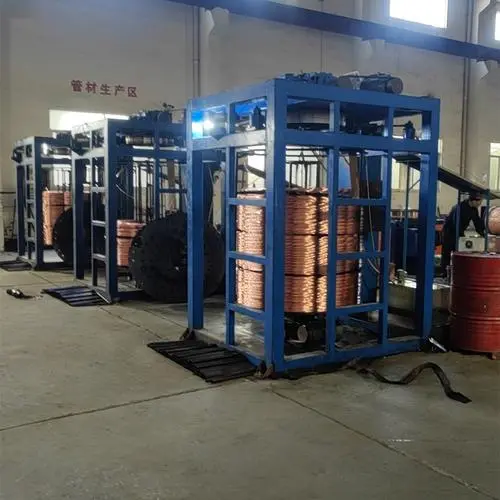
2) Production line design. The design components of the production line mainly include cable insulation core pay-off, core position control, front traction 1, aluminum rod pay-off, aluminum rod cleaning unit, aluminum extrusion host, cooling system, rear traction 2, cable position control, aluminum sleeve tightening device, rear traction 3, aluminum sleeve induction preheating device, φ30+φ120+φ60 multi-layer co-extrusion extruder, cooling water tank, air blowing drying, inkjet meter, rear traction 4, take-up rack, and the entire production line linkage electrical control system; auxiliary units include induction heating furnace, machine head rotation mechanism, workbench and machine head cleaning device, etc., which are used for preheating and cleaning of the machine head respectively. The process control is performed by the CDS computer system, the system operating environment is Windows XP, and it is connected to the Siemens S7-200 PLC system installed in the drive system. It is used to select and record data, and can display data in list and graphic form. It can be used for real-time quality control. The equipment can produce up to 500 kV 1×2 500 mm2 seamless aluminum sheathed cable.
3) Design of aluminum rod laying and cleaning. The designed smooth aluminum sleeve continuous extrusion process uses two aluminum rods with a diameter of φ12 mm as raw materials. The aluminum rod laying is the key to realizing continuous extrusion of aluminum sleeves. The use of loop laying ensures the continuity of long-length cable production. The raw material laying is two aluminum rods with a diameter of φ12 mm. Before the two aluminum rods enter the extruder, a set of auxiliary devices is specially designed to straighten the two aluminum rods in motion, and a linked circular fine copper wire brush is designed to clean the surface of the aluminum rod, and then clean it to wash away the oxide layer and oil on the aluminum rod, so as to ensure that the surface of the aluminum rod entering the extruder is clean and avoid impurities, pores or other defects in the extruded aluminum sleeve.
4) Anti-scalding design for the core. A cooling water pipe with a sandwich is designed between the cable core and the inner wall of the aluminum tube to prevent the aluminum tube from burning the cable core under high temperature. After the aluminum tube is formed, it must be immediately cooled externally. For this purpose, the design adopts a surrounding water curtain cooling method, which is characterized by uniform and uninterrupted cooling of the aluminum tube, ensuring the roundness of the aluminum tube, and effectively preventing the cable insulation core from being damaged by overheating at the die mouth, ensuring that the insulation core is not burned, thus solving the technical problem of scalding the insulation core by extruding the aluminum sleeve.
5) Moisture-proof design of the cable core buffer layer. The aluminum tube extrusion die is made of special materials. The tube mouth is fully closed during normal extrusion of the aluminum tube. The water vapor during water curtain cooling after the aluminum tube is extruded is completely blocked in front of the extruded aluminum sleeve, ensuring that the cable buffer layer entering the extruded aluminum tube head is always in a dry state, thereby completely preventing the buffer layer from getting damp, and further eliminating the problem of moisture in the cable buffer layer during the manufacturing process.
1.2 Aluminum sleeve concentricity and roundness design
In order to ensure the concentricity and roundness of the aluminum sleeve, the extrusion die is precisely designed and the temperature is accurately controlled.
1) Aluminum sleeve extrusion temperature and mold core design. The mold was repeatedly designed and improved, and the original runner laminate core was changed to a castle core, so that the aluminum was evenly distributed in the mold cavity, ensuring that the pressure of the aluminum material in the runner remained consistent, so that the thickness of the extruded aluminum tube remained uniform. The molten aluminum temperature is about 500 ℃, and the aluminum from the two runners is mixed in the mold cavity and forms an aluminum tube between the mold core and the cover plate. In order to ensure the uniformity of the aluminum tube thickness, the runner of the mold core seat was repeatedly designed and improved, and experiments proved that the same mold core seat can be used for cables with similar outer diameters.
2) Preheating temperature setting of the extrusion die. Different temperatures will lead to different flow rates and pressures of aluminum. After the raw aluminum rod continuously enters the extrusion wheel, friction generates heat, which reaches a basic balance with the temperature of the induction sensor on the upper part of the die. In order to ensure the uniform thickness of the aluminum sleeve, the temperature of each part needs to be accurately controlled. The preheating temperature setting of the extrusion is more critical. If the preheating temperature is unreasonable, it cannot be guaranteed that the aluminum sleeve extruded when the machine is just turned on is very round. After many trials, the appropriate temperature for preheating was summarized. The external preheating temperature of the die was set to (550±5) ℃, the bottom to (500±5) ℃, and the top to (480±5) ℃. Finally, the trial production was successful.
2. Process design of shrinking seamless aluminum sleeve
2.1 Aluminum sleeve reduction and process
When the aluminum sleeve is continuously extruded from the extruder, a certain gap is left between the buffer layer of the insulating core. If the aluminum sleeve is too tight during extrusion, it is very easy to burn the buffer layer or the cable core, and the surface of the extruded aluminum sleeve will be uneven; if there is a certain gap between the aluminum sleeve and the cable buffer layer, there will also be a risk of a large gap and poor contact, and the aluminum sleeve will wrinkle when the cable is bent, affecting the quality of the cable product. Therefore, the aluminum sleeve must be reduced in diameter after extrusion. At present, there are roughly two ways to reduce the diameter of the aluminum sleeve: one is the drawing type reduction. When this reduction method is used, the cable is subjected to a large traction force, and the thicker the aluminum sleeve of the large-size cable, the greater the traction force it will bear, which is also a test for the performance of the equipment; the second is the roller type reduction. When this frictionless roller reduction method is used, the cable is subjected to little tension and is not limited by the cable specifications. Its tension is mainly traction. Therefore, on the whole, the latter roller type reduction process has better performance.
2.2 Roller type shrinking process design
In response to the new roller-type shrinking process, we cooperated with the British BWE company to design a set of roller-type seamless aluminum sleeve shrinking devices, which can shrink the seamless aluminum sleeve covering the buffer layer cable core. The roller device has three rollers, each of which is designed as an inner arc concave extrusion surface. The three inner arc concave extrusion surfaces are designed as mechanical gear transmissions, which can be retracted inward at the same time. After all are retracted inward, they will automatically align to form a complete circular hole at the center. There are three groups of such shrinking rollers, and the angle of each group is rotated 180° at the center, which is equivalent to each surface of the entire circumference generating a tightening force with the same pressure. The aluminum sleeve after shrinking is strictly inspected, and the roundness and outer diameter of the aluminum sleeve are repeatedly tested. If the outer diameter is too large, the degree of compression of the three rollers can be manually adjusted, and the appropriate adjustment is made until the outer dimensions of the aluminum sleeve after shrinking meet the process requirements. The surface of the aluminum sleeve after diameter reduction has no scratches, burrs or indentations, which not only meets the requirements of roundness and smoothness of the inner and outer surfaces of the aluminum sleeve, but also meets the corresponding positive and negative tolerance requirements of the outer diameter of the aluminum sleeve.
3. Sheath three-layer co-extrusion process
3.1 Three-layer co-extrusion process design
Composite smooth aluminum sheath is a composite sheath that is firmly bonded and compounded with multiple layers such as aluminum sheath, hot melt adhesive, outer sheath, conductive layer, etc. The purpose of the compound is to prevent the sheath from wrinkling when the cable is wound up during production and bent during on-site installation. To this end, based on the research and development of welding smooth aluminum sheath coating hot melt adhesive technology, a new sheath three-layer co-extrusion process was further designed.
In addition, in cooperation with Austrian company ROSENDAHL, we designed and used three extruders of φ30+φ120+φ60 to form a complete set of extruder heads, which can extrude hot melt adhesive, outer sheath and conductive layer at the same time. The three layers are evenly thick and firmly bonded. This extrusion equipment is combined with the extrusion aluminum sheath equipment of British company BWE to form a new continuous integrated seamless smooth aluminum sheath cable production line, which focuses on solving the synchronization problem of various equipment components of the production line, overcomes many problems in the electrical control system, and forms a set of special production processes for seamless smooth aluminum sheath cables.
3.2 Three-layer co-extrusion process
1) Design the process flow. Conductor wire drawing annealing → conductor core strands twisted and pressed → conductor strands cabled → three-layer co-extrusion test cross-linking → oven degassing → wrapping semi-conductive buffer layer + metal wire cloth tape → extrusion of aluminum sleeve → roller shrinking of aluminum sleeve → aluminum sleeve preheating → hot melt adhesive, outer sheath, conductive layer three-layer co-extrusion → water tank cooling → winding → factory test → storage.
2) Key operation steps. Before the three-layer co-extrusion of the seamless smooth aluminum sheath cable sheath, a set of aluminum sheath induction heating device is designed and installed. Because after the extruded aluminum sheath is reduced in diameter by the roller, due to the long traction distance, the surface of the aluminum sheath is already in a cold state when it enters the extruder head, which is basically close to the room temperature. When the three-layer sheath is co-extruded, the hot melt adhesive extrusion package encounters the cold aluminum sheath surface, which will cause the hot melt adhesive to solidify quickly, resulting in unreliable adhesion with the aluminum sheath, and wrinkles on the sheath surface when the cable is bent. In order to improve the adhesion between the hot melt adhesive and the aluminum sheath, the aluminum sheath after the reduction must enter the three-layer co-extrusion head in a hot state. Therefore, an aluminum sheath induction heating device is designed and installed in front of the extruder to preheat the aluminum sheath after the reduction. The preheating temperature is designed to be around 120 ℃ to ensure that the aluminum sheath will not burn the wire core during the traction movement, so that the aluminum sheath, hot melt adhesive, outer sheath, and conductive layer are firmly bonded.
3) Cooling process requirements. The seamless aluminum sheathed cable after three-layer co-extruded sheath needs to be cooled in a water tank to make the aluminum sheath, hot melt adhesive and outer sheath firmly bonded, and finally the seamless aluminum sheathed cable is wound on the take-up reel by a traction machine. Since the elastic modulus of the polyethylene sheath material is large, the sheath will not wrinkle when bending and winding. Take a small section of the finished cable and heat the sheath with a blowtorch. When the hot melt adhesive is in a molten state, use a special tool to peel off the outer sheath in time. Visually inspect the inner surface of the aluminum sheath to be smooth and without bumps. Then conduct partial discharge, AC withstand voltage and outer sheath withstand voltage tests on the finished cable. The test is qualified.
4. Seamless aluminum sleeve performance test
4.1 Mechanical strength test of seamless aluminum sleeve
In order to analyze the mechanical properties of the extruded seamless aluminum sleeve, two sections of seamless smooth aluminum sleeve samples before and after diameter reduction were taken, and the National Key Laboratory of Electrical Insulation Research Center of Xi'an Jiaotong University was commissioned to conduct a tensile test on the seamless aluminum sleeve to study the transverse and longitudinal tensile mechanical properties of the sleeve; the difference in tensile properties of the smooth aluminum sleeve before and after diameter reduction and the influence of diameter reduction on the mechanical properties of the aluminum sleeve were compared (see Table 1).
Based on the above data comparison and analysis, the strength and plasticity parameters of the aluminum sleeve specimens after diameter reduction are improved in the transverse direction, while the strength and plasticity parameters in the longitudinal direction are reduced accordingly, but the change range is within 20%. Therefore, the diameter reduction process leads to an improvement in the mechanical properties of the aluminum sleeve in the transverse direction, while the mechanical properties in the longitudinal direction are slightly reduced. In addition, excluding the influence of the different number of specimens, from the tensile curve, the performance of the aluminum sleeve becomes more stable and the dispersion becomes smaller after diameter reduction. The increase in the transverse strength and plasticity parameters of the aluminum sleeve after diameter reduction means that the aluminum sleeve's resistance to lateral pressure and impact is improved, and the longitudinal strength and plasticity parameters are reduced, indicating that the aluminum sleeve has better bending performance.
4.2 Bending test of seamless aluminum sheathed cable
4.2.1 Cable bending test
The bending performance of seamless smooth aluminum sheathed cables was tested and studied. The results showed that seamless smooth aluminum sheathed cables can fully meet the bending requirements of 20 times the cable diameter and meet the on-site laying requirements. The trial-produced YJLP03-Z 64/110 1×630 seamless smooth aluminum sheathed cable was commissioned by the National Wire and Cable Quality Supervision and Inspection Center to perform a smooth aluminum sheath "20 times the cable diameter bending test". The test results fully met the standard requirements.
4.2.2 Cable impact test
The National Wire and Cable Quality Supervision and Inspection Center was commissioned to conduct an impact test on seamless smooth aluminum sheathed cables. Referring to the test method and requirements of IEC TR61901-2016 (Tests recommended on cables with a longitudinally applied metal foil for rated voltages above 30 kV (Um=36 kV) up to and including 500 kV (Um=550 kV)), a 27 kg weight was thrown from a height of 0.27 m to a 1 m long smooth aluminum sheathed cable, and an impact test was performed on a point on the outer sheath, which was repeated 4 times; then an impact test was performed on the position opposite to the impact point, which was repeated 4 times; the impact object had a 1 mm curvature radius and a 90° wedge-shaped contact surface; finally, the results of the cable dissection inspection showed that there was no puncture damage at the impact point, no deformation of the insulation, and no sharp-angle deformation invading the insulation at the impact position, which fully met the standard requirements.
The seamless and smooth aluminum sheath and the insulated core are integrated into one, which is equivalent to a solid core, improving the side impact resistance and lateral pressure resistance. The seamless and smooth aluminum sheath cable has a tight structure, which increases the friction resistance between the inner and outer structural layers of the core, which is very beneficial for vertical laying and operation in high-drop shafts. The core will not slip and be damaged, and the aluminum sheath will not wrinkle.
The above tests have proved that the bending performance of seamless smooth aluminum sheathed cable is basically the same as that of corrugated aluminum sheathed cable, which can fully meet the requirements of on-site laying, and vertical laying is more convenient and safer than corrugated aluminum sheathed cable.
4.3 Laying application test research
In order to verify the bending and lateral pressure capabilities of seamless smooth aluminum sheathed cables in field applications, a smooth aluminum sheathed cable with a specification of YJLP03-Z 64/110 1×800 was selected for bending test. The finished cable had a diameter of about 92 mm and a length of about 100 m. After laying, check whether the surface of the smooth aluminum sheathed cable and the traction head were damaged. Finally, the DC withstand voltage test of the cable outer sheath was carried out according to the on-site acceptance standard. The results showed that the cable surface was not damaged, the sheath was not wrinkled, the appearance was round, and the visual inspection passed; the lateral pressure during bending and pulling was 2 800 N/m, which met the requirement of lateral pressure less than 3 000 N/m in Appendix H of GB 50217-2018 "Design Standard for Power Engineering Cables", and the test was qualified.
The mechanical and physical properties of the cable outer sheath after on-site bending and drawing construction were tested. The results showed that the tensile strength of the outer sheath reached 23.8 N/mm2 and the elongation reached 680%. The main test data are shown in Table 2.
5 Conclusion
The 110 kV seamless smooth aluminum sheathed cable developed has passed the type test of the National Wire and Cable Quality Supervision and Inspection Center, with excellent performance indicators. The product has been used in a power supply company and is running well.
The seamless smooth aluminum sheath cable has advanced manufacturing technology and tight structure. The inner and outer surfaces of the aluminum sheath are smooth without bumps, realizing the technological innovation of seamless and smooth inner and outer surfaces of the aluminum sheath. The seamless smooth aluminum sheath cable has great safety and technical advantages in structural design, mechanical properties, installation and laying. The aluminum sheath and the insulating core are integrated into one, which improves the ability to resist side impact and lateral pressure, has excellent bending performance, and can also prevent the risk of internal electrical corrosion of the cable during operation.
From the demand side, due to the limitations of the laying environment and construction process, corrugated aluminum sheathed cables are basically used to reduce the risk of mechanical damage to the cables. However, with the development of the industry, the advancement of technology and the attention of relevant departments, the laying environment and construction equipment of domestic cables have been greatly improved, creating good conditions for the application of seamless smooth aluminum sheathed cables.
From the supply side, some manufacturers have the R&D and production capabilities of smooth aluminum sheathed cables and have made certain technical progress. However, for this new type of cable structure, it is necessary to carry out systematic and comprehensive research from multiple aspects such as design, construction and application, so as to provide guidance for the actual engineering application of cables and ensure the safe operation of the power grid.