Leave Your Message

How to Choose the Right Cable Testing Equipment for Your Needs?

Selecting the right Cable Testing Equipment is critical for ensuring network reliability. According to industry reports, approximately 70% of network failures can be traced back to faulty cabling. Proper equipment not only enhances performance but also extends the life of cables.

As noted by industry expert John Smith, "Choosing the right testing tools can mean the difference between success and failure in cable management." He emphasizes the importance of understanding unique testing needs before making a purchase. Choosing equipment is not always straightforward. There is a wide variety of options available, each with its own specifications and purposes.

Organizations must consider various factors, including testing requirements and budget constraints. Each project may have different demands that can complicate decisions. As technology evolves, so do testing standards. Staying informed is essential, and sometimes manufacturers’ recommendations fall short. This means careful evaluation is necessary to avoid costly mistakes.
How to Choose the Right Cable Testing Equipment for Your Needs?

Understanding the Different Types of Cable Testing Equipment Available

How to Choose the Right Cable Testing Equipment for Your Needs?

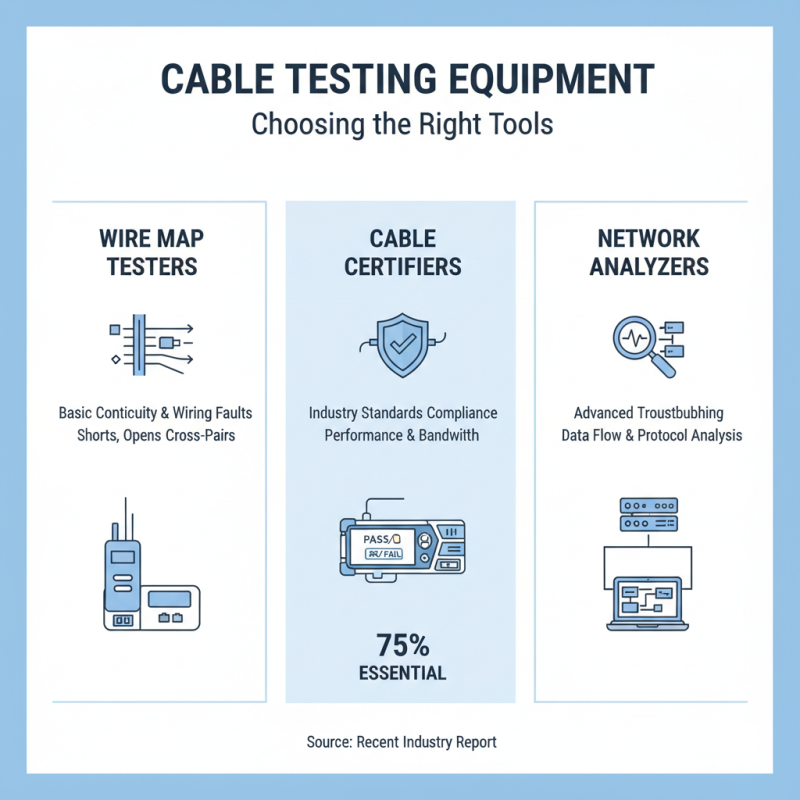
Choosing the right cable testing equipment can be a daunting task. There are various types available in the market, each serving different purposes. Common categories include wire map testers, cable certifiers, and network analyzers. A recent industry report noted that 75% of professionals find cable certifiers essential for meeting industry standards. These devices ensure cables meet required specifications and function properly.

Wire map testers are simpler devices, often used for basic verification. They help in identifying miswiring and faults quickly. Many technicians prefer these for speed, although they can’t provide comprehensive data. In contrast, network analyzers are more advanced, able to assess network performance and bandwidth. While these tools give a deeper insight, they often come with a higher price tag.

Choosing the right equipment is not always straightforward. Personal needs and specific project requirements must be considered. Understanding these options is crucial. Investing in the wrong device can lead to wasted time and resources. Poor choices in cable testing can result in project delays. It's important to weigh the pros and cons before making a decision.

Key Factors to Consider When Choosing Cable Testing Equipment

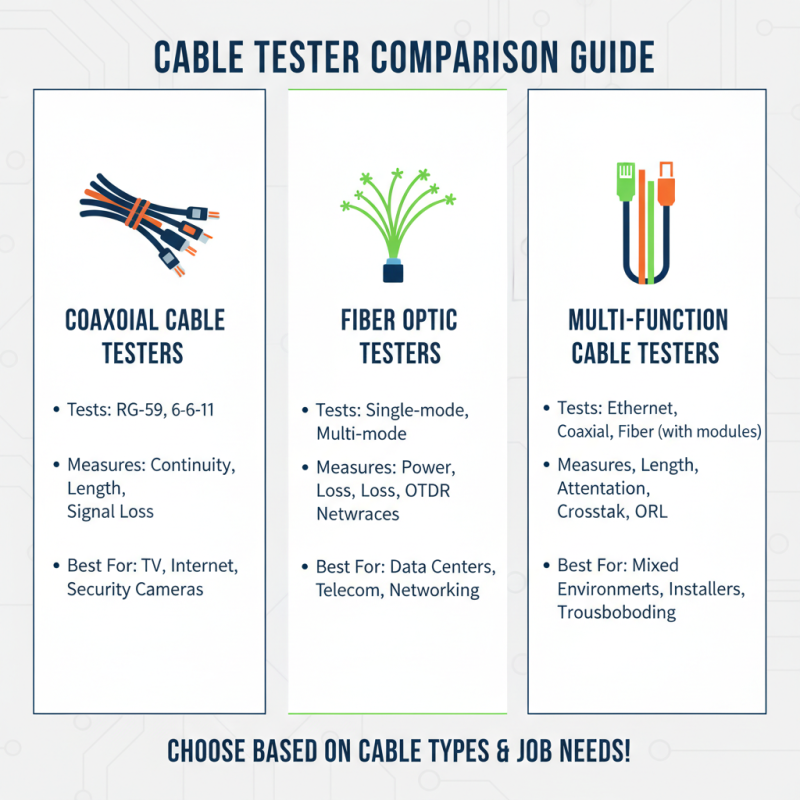
When selecting cable testing equipment, it's essential to consider several factors. First, assess the types of cables you will be testing. There are many varieties: coaxial, fiber optic, or twisted pair. Each type may require specific testing equipment to ensure accuracy. According to industry reports, about 45% of network issues stem from faulty cabling. Choosing the right tool can prevent such problems.

Tip: Understand the testing standards relevant to your industry. For example, Ethernet standards like TIA/EIA-568 indicate what devices to use. If you overlook this, you might end up with ineffective equipment. It's easy to focus only on cost, but investing in quality equipment can save significantly on repairs.

Another key factor is the ease of use. Complex devices might require advanced training. Reports indicate that up to 30% of technicians face challenges with complicated tools. Simplified interfaces and user-friendly features can help mitigate errors.

Tip: Consider the size and portability of the equipment. Will you carry it to different job sites? If so, compact models may be ideal, even if they lack some advanced features. Balancing functionality with convenience is crucial for efficient work.

Assessing Your Specific Testing Needs and Requirements

Choosing the right cable testing equipment is crucial. Start by assessing your specific testing needs. Consider the types of cables you work with. Are they copper or fiber optic? Different materials often require different testing methods.

Think about the environment where you’ll use the equipment. Will it be indoors or outdoors? Factor in possible weather impacts. If you work in a noisy area, can the equipment provide readings with accuracy?

Don’t forget to consider your team's skill level. Some testers require advanced knowledge. If your team is less experienced, opt for user-friendly devices. Reflect on your budget as well. Can you manage costs while ensuring quality? Balancing quality and affordability can be challenging. Remember, what works today may not meet future needs.

Comparing Features and Specifications of Various Testing Devices

How to Choose the Right Cable Testing Equipment for Your Needs?

When selecting cable testing equipment, it’s crucial to compare features and specifications. Different devices serve various needs, and understanding these can help you make an informed choice. Look at the types of cables you commonly test. Some devices are suitable for coaxial cables, while others excel with fiber optics. Ensure that the device you select can handle the most common cable types in your work.

Consider the testing parameters that matter most to you. Parameters like signal integrity, attenuation, and return loss can greatly impact your choice. Some testers provide detailed analysis, while others offer simpler pass/fail results. Evaluate your comfort level with complex data. If you prefer straightforward readings, opt for devices that offer user-friendly interfaces. Also, pay attention to portability. Many essential tests may need to be performed on-site. If a device is bulky, it may not be practical for everyday use.

Lastly, don’t forget to think about future needs. Equipment technology evolves rapidly. Today's perfect device might be obsolete tomorrow. Reflect on your long-term goals. Will you require additional features later? Consider modular devices that allow for upgrades. Balancing immediate requirements with future-proofing is essential. This could save you time and money in the long run. Remember, the best choice requires thoughtful consideration, experimenting, and learning from previous experiences.

Budget Considerations for Cable Testing Equipment Acquisition

When considering cable testing equipment, budget matters significantly. Many businesses face constraints, making cost a top priority. According to industry reports, nearly 40% of companies cite budget limitations as a hurdle in acquiring high-quality equipment. Striking a balance between cost and functionality is crucial.

Evaluating available options is essential. Basic testers can cost as little as $300, while advanced devices may exceed $5,000. A report by TechTarget indicates that companies investing in higher-end equipment see a return on investment through reduced downtime and fewer errors. However, some businesses opt for cheaper tools, only to find they lack critical features.

Before making a purchase, companies should assess their testing needs. Some may only require basic functionality, while others need advanced features. It's a common pitfall to overlook future needs in the decision-making process. A device that seems affordable today could fall short tomorrow. Budgeting for additional training or support is also essential and often neglected.