Why Choose Optical Fiber Equipment for Your Business Needs?
In today's fast-paced digital landscape, businesses face critical decisions regarding their communication infrastructure. According to Dr. Jane Thompson, an expert in optical communications, "Investing in Optical Fiber Equipment enhances data transmission speed and reliability." This statement underscores the pressing need for companies to consider modern solutions for their networking challenges.
Optical Fiber Equipment offers a multitude of advantages, including greater bandwidth and immunity to electromagnetic interference. Companies often overlook these benefits, focusing instead on traditional copper wiring. By doing so, they risk falling behind their competitors who embrace advanced technology. The right optical solutions can transform operations and improve overall efficiency.
Despite the growing awareness, some organizations still hesitate. They may doubt the initial investment costs or the complexity of installation. These concerns often stem from a lack of understanding. However, it is essential to recognize that the long-term benefits of Optical Fiber Equipment significantly outweigh the challenges. In a world increasingly driven by data, making informed choices about networking equipment is crucial for sustained success.

Understanding the Basics of Optical Fiber Technology
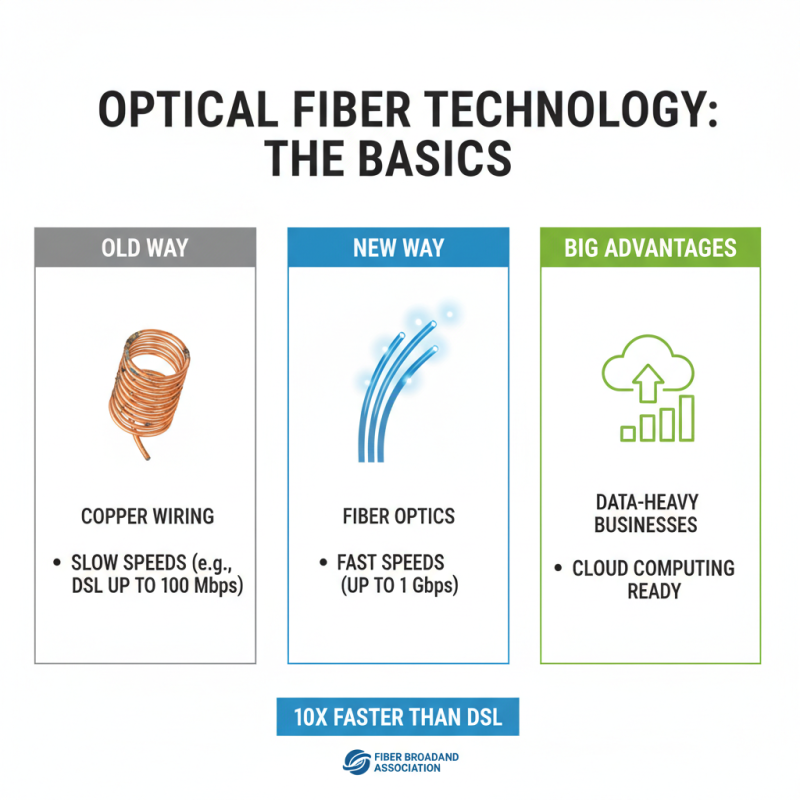
Optical fiber technology has revolutionized the way businesses communicate. Its high-speed data transmission capabilities stand in stark contrast to traditional copper wiring. A recent report from the Fiber Broadband Association shows that fiber optics can deliver internet speeds up to 1 Gbps, which is ten times faster than many DSL connections. This speed allows businesses to handle large volumes of data efficiently, making it essential for companies that rely on cloud computing.
In addition to speed, optical fiber offers remarkable reliability. Unlike copper, fiber is immune to electromagnetic interference, which can disrupt connectivity. According to a study by the Institute of Electrical and Electronics Engineers (IEEE), fiber networks reduce downtime by over 50% compared to traditional networks. This reliability is crucial for industries where constant connectivity is a necessity, such as finance and healthcare. However, the installation process can be challenging and may require extensive planning and investment.
Moreover, the durability of optical fibers is noteworthy. They can withstand harsh environmental conditions, which can be a double-edged sword. While this durability lowers maintenance costs over time, the initial installation can be complex. Transitioning from copper to fiber optics requires thoughtful consideration of existing infrastructure. Thus, while optical fiber technology presents clear advantages, it may not be the simplest solution for every business.
Advantages of Optical Fiber Equipment Over Traditional Wiring
Optical fiber equipment is transforming how businesses communicate. This technology offers clear advantages over traditional wiring. One major benefit is speed. Optical fiber cables transmit data much faster. Businesses can transfer large files in seconds. This level of efficiency is crucial in today’s fast-paced environment.
Another significant advantage is bandwidth. Optical fibers can support higher amounts of data than copper wires. This helps prevent bottlenecks. As businesses grow, they need reliable connections. Higher bandwidth ensures seamless operations. Employees can access information quickly without interruption.
Tip: Consider the distance between devices. Optical fiber is effective over long distances. This can reduce costs in infrastructure. Traditional wiring loses signal strength over distance, so this is an important factor.
Durability is another feature. Fiber optics are less susceptible to interference. They are also more resistant to physical damage. This means reduced maintenance costs over time. However, installation can be more complex. Hiring experienced professionals is essential. Proper setup ensures optimal performance.
Tip: Always evaluate your current and future data needs. This will guide your investment in optical fiber equipment. Making informed decisions protects your business investments.
Cost Considerations for Implementing Optical Fiber Solutions
Implementing optical fiber solutions can significantly impact a business’s operational costs. According to a report by Research and Markets, the optical fiber market is expected to grow to $7.6 billion by 2025. This growth is driven by the increasing demand for high-speed internet and efficient data transmission. Businesses seeking reliable connectivity may find the initial setup costs daunting; however, the long-term savings often justify the investment.
Maintenance expenses for optical fiber systems tend to be lower than those for traditional copper networks. A study from the International Telecommunication Union indicates that optical fiber installations can reduce energy consumption by 30% or more. Lower energy costs directly translate into reduced operational expenditures. It’s also essential to consider future scalability. Optical fiber networks can easily be upgraded to handle greater bandwidth demands without major overhauls, ensuring businesses are prepared for future growth.
While the benefits are substantial, challenges exist. The installation process can be complex and requires skilled labor. Not all areas are suitable for optical fiber deployment, particularly rural regions where infrastructure may lag. These factors should be weighed carefully. The choice to invest in optical fiber equipment requires strategic planning, but the potential rewards may greatly outweigh the initial hurdles.
Applications of Optical Fiber in Various Industries
Optical fiber technology has found critical applications in various industries. In telecommunications, it provides high-speed data transmission. This enables seamless communication across vast distances. Businesses benefit from faster internet speeds and enhanced connectivity.
In the healthcare sector, optical fibers are crucial. They are used in endoscopy for minimally invasive surgeries. This method reduces recovery times and allows for detailed internal examinations. The precision of optical fibers makes them a preferred choice in medical devices.
Tips: Ensure that your infrastructure supports optical fiber installation. Consider future scalability when planning.
In industrial settings, optical fibers play a role in monitoring systems. They allow for real-time data collection without electromagnetic interference. This accuracy is vital for process optimization and safety. However, transitioning to optical fiber can be challenging. Organizations must address existing equipment compatibility and training needs.
Tips: Collaborate with experts during the transition. Invest in employee training programs to maximize benefits.
Applications of Optical Fiber in Various Industries
Future Trends in Optical Fiber Technology for Business Needs
Optical fiber technology is rapidly transforming the business landscape. Recent reports indicate that the global optical fiber market is projected to reach $6 billion by 2026, driven by increasing demand for high-speed internet and reliable communication systems. Businesses are leaning towards optical fiber to enjoy faster data transfer rates and improved bandwidth. According to the International Telecommunication Union, optical fiber can support speeds exceeding 1 Gbps, which is crucial for data-heavy applications.
The trend towards increased data consumption is evident. Enterprises are investing heavily in network infrastructure. A study by the Fiber Broadband Association found that fiber optic installations lead to a 20% increase in productivity. This technology not only enhances efficiency but also plays a critical role in supporting cloud services and remote work arrangements. However, many businesses still hesitate. They question the initial investment in optical fiber infrastructure.
Flexibility and scalability are essential features for future optical fiber solutions. As businesses adapt to changing technology needs, the ability to upgrade quickly without significant downtime is vital. Research indicates that fiber networks are easier to expand than traditional copper networks. This adaptability allows companies to grow without being hindered by outdated technology. Embracing optical fiber is not just a trend; it’s a necessary response to the demands of a digital world.
Why Choose Optical Fiber Equipment for Your Business Needs?
| Dimension |
Data |
| Speed (Mbps) |
1000 - 10000 |
| Distance (km) |
Up to 100 |
| Data Loss (%) |
Less than 0.1 |
| Installation Cost ($) |
5000 - 20000 |
| Maintenance Cost ($/year) |
100 - 500 |
| Lifespan (years) |
20 - 30 |
| Future Speed Potential (Mbps) |
Over 100000 |