What is a Cable Stranding Machine and How Does It Work?
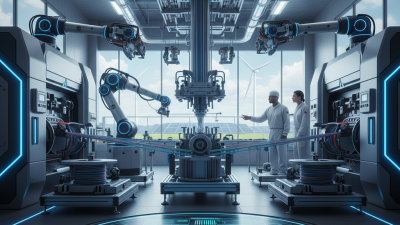
Cable stranding machines play a vital role in the manufacturing industry. These machines are essential for creating cables used in various applications. They twist multiple strands of wire together to form a strong and flexible cable structure. Understanding their functionality can provide insights into advanced manufacturing processes.
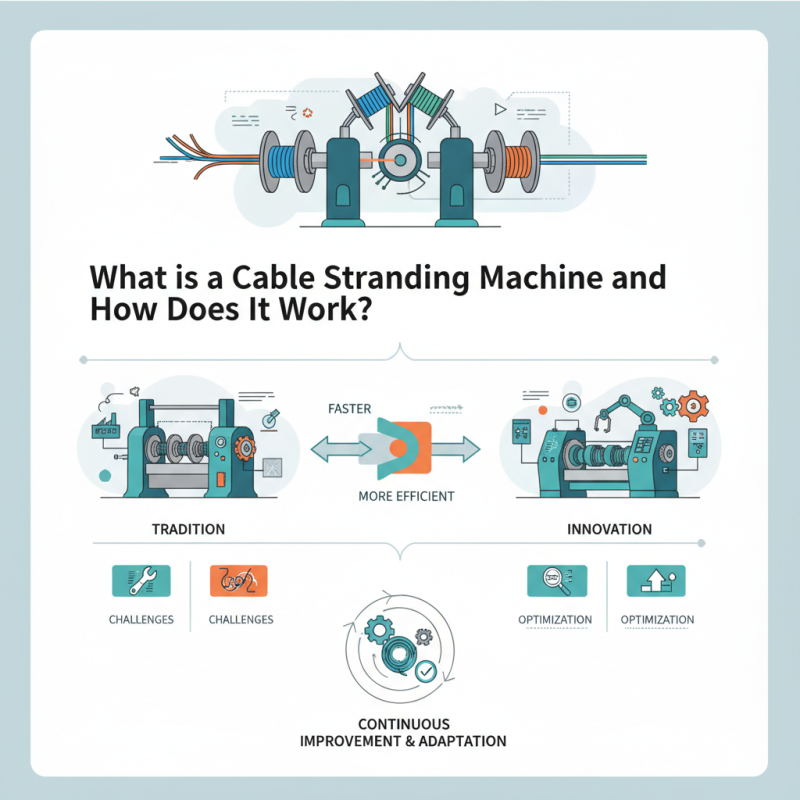
In recent years, the integration of innovative technologies has transformed how cable stranding machines operate. Automation and precision engineering have made these machines faster and more efficient. They are now capable of producing cables with varying specifications and higher quality standards. However, challenges remain in optimizing these machines for different materials and applications.
Factors such as machine calibration and maintenance can affect performance. Not every manufacturer has access to state-of-the-art equipment. Some may struggle to keep up with industry demands. Ensuring continuous improvement and adaptation is crucial. Cable stranding machines symbolize the blend of tradition and innovation in manufacturing, highlighting the need for ongoing reflection and enhancement in this field.
What is a Cable Stranding Machine?
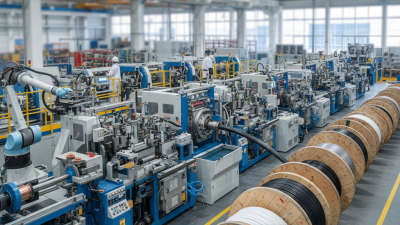
A cable stranding machine is a key piece of equipment in wire manufacturing. It twists wires together to form cables used in various applications. This machine often combines multiple wires, improving strength and conductivity. Different types exist, including concentric and helical stranding machines. Each type has unique features for specific cable requirements.
The operation of a cable stranding machine is fascinating yet complex. It usually works by pulling cables through a series of rotating spools. These spools twist the wires at precise angles. The process ensures uniform tension and helps prevent damage. Users must monitor the machine’s speed and tension, which can be challenging. A minor error may lead to issues like uneven stranding or wire breakage, which can be costly.
Adjusting the machine for different wire gauges also poses a challenge. Selecting the correct parameters is essential, and requires experience. Operators must also conduct regular maintenance to avoid breakdowns. Even small delays can disrupt production schedules. Overall, the cable stranding machine plays a vital role in the manufacturing sector, but it demands careful attention and skill to operate successfully.
Components of a Cable Stranding Machine
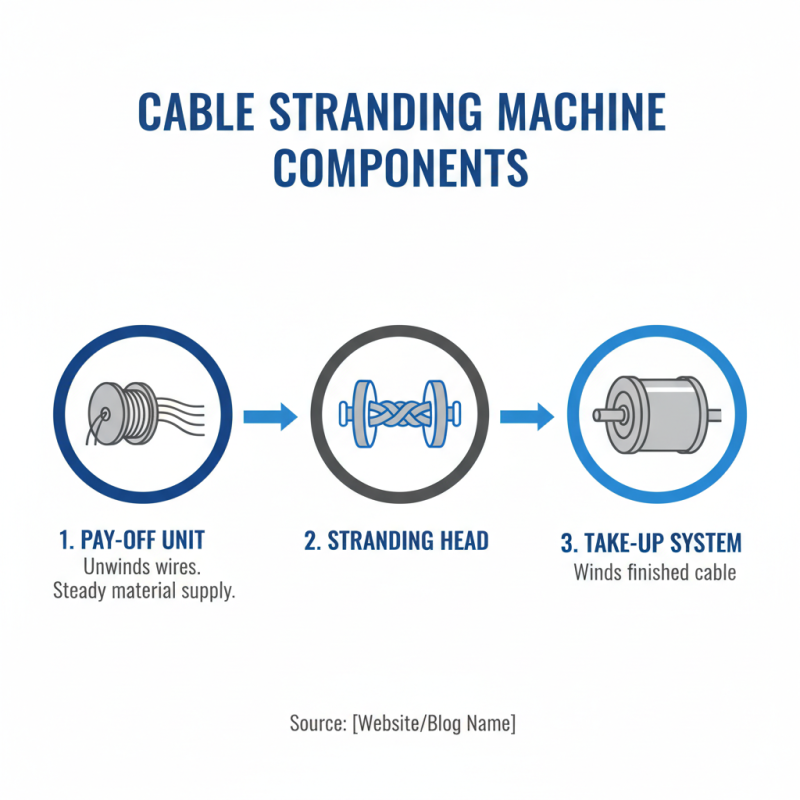
A cable stranding machine is vital in the manufacturing of electrical cables. Understanding its components helps in grasping its functionality. The main parts of this machine include the pay-off, stranding head, and take-up system. The pay-off unit unwinds the wires. It ensures a steady supply of materials.
The stranding head is where the magic happens. It twists and lays the wires together. This process defines the strength and flexibility of the cable. Many machines use a helical or planetary arrangement for optimal stranding. According to industry reports, the global demand for cable stranding machines is projected to grow at a rate of 5% annually. This reflects the increasing need for robust electrical infrastructure.
Then, there's the take-up system. It collects the finished cable, winding it onto reels. This part is crucial for quality control. If the tension is not managed, it can result in defects. Industry data shows that improper tension can lead to failures in up to 10% of produced cables. This highlights the need for precision in every stage of manufacturing. Each component interacts with the others, creating a complex yet efficient process.
How Does a Cable Stranding Machine Function?
A cable stranding machine is essential in the wire and cable industry. It combines multiple wires into a single cable efficiently. These machines can produce various cable types, such as power cables and communication cables. They work by twisting and layering wires around a core, often in specific patterns. The design influences the cable's flexibility and performance.
The operation of a cable stranding machine involves several stages. First, the wires are fed into the machine. Monitors track tension to ensure consistency. The twisting process creates a helical structure. According to industry reports, optimal stranding speeds can reach up to 1,500 meters per minute. This efficiency aids manufacturers in meeting high market demands. However, achieving such speeds requires precise calibration and regular maintenance.
User feedback indicates common challenges. Issues like wire breakage and uneven tension often arise. These can lead to product defects and increased waste. Additionally, some factories struggle to integrate new technologies into older machines. Continuous improvement is crucial in this competitive space. Innovation in stranding techniques and materials can enhance productivity and quality. Manufacturers must adapt or risk falling behind.
Applications of Cable Stranding Machines in Industry
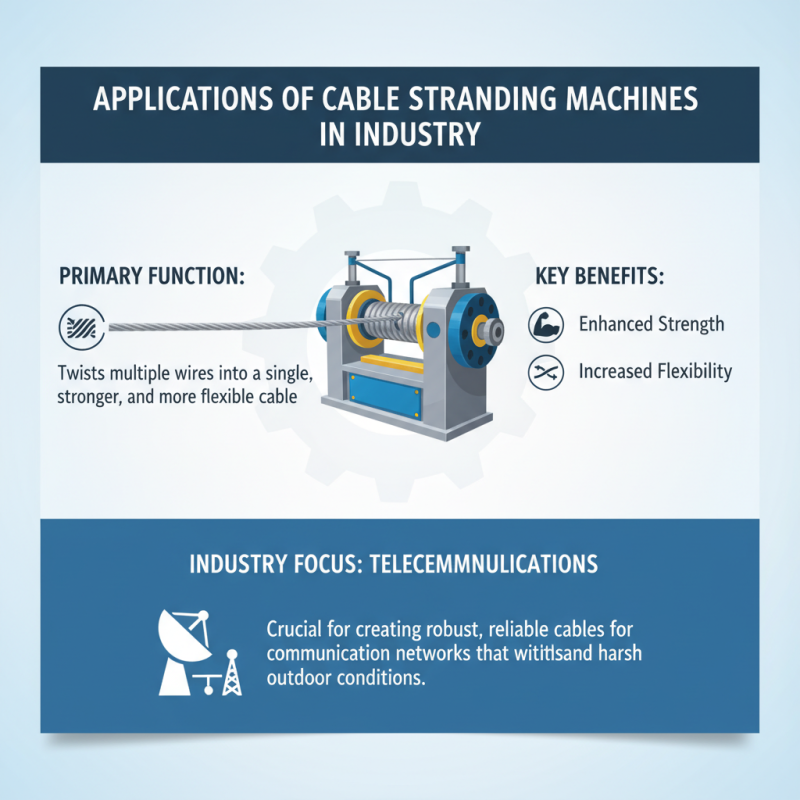
Cable stranding machines play a vital role in various industries. Their primary function is to twist together multiple wires into a single cable. This process enhances the cable's strength and flexibility. In telecommunications, these machines are crucial. They create cables that can withstand harsh outdoor conditions. Robust and reliable, these cables are essential for communication networks.
In the automotive industry, cable stranding machines are equally important. They produce wiring harnesses that connect various electronic components in vehicles. These harnesses must be durable and resistant to corrosion. Engineers often face challenges in ensuring the quality and longevity of these cables. Mistakes in the stranding process can lead to failures in electrical systems, which can be costly.
The energy sector also benefits from these machines. Power cables require precise stranding to manage voltage and reduce power loss. Here, the balancing act is intricate. An error in the process can compromise energy transmission efficiency. Plus, maintaining machine performance is an ongoing challenge. Regular maintenance is essential, but it's not always prioritized. Industries must reflect on how to improve consistency and reliability in cable production.
Benefits of Using Cable Stranding Machines in Production
Cable stranding machines play a crucial role in the production of various wire and cable types. The benefits of using these machines are significant. According to a recent industry report, the global cable manufacturing market is expected to reach $300 billion by 2025. This growth highlights the importance of efficient production techniques.
Utilizing cable stranding machines improves efficiency in the manufacturing process. They reduce downtime and enhance the consistency of the finished product. These machines can produce cables faster than manual methods. Reports indicate a potential increase in production speed by up to 40%. Faster production can lead to meeting market demand more effectively.
Quality is another vital aspect. Cable stranding machines ensure uniformity in strand placement. This precision reduces defects and waste. However, the initial investment can be a concern for some manufacturers. The cost may be daunting, but the long-term benefits often outweigh these concerns. Balancing costs and technology investment is an ongoing challenge in the industry.
What is a Cable Stranding Machine and How Does It Work? - Benefits of Using Cable Stranding Machines in Production
| Dimension |
Specification |
Benefits |
| Stranding Capacity |
1-12 strands |
Increased efficiency in production |
| Wire Diameter Range |
0.5 mm - 10 mm |
Versatile for various cable types |
| Speed of Operation |
100 - 300 meters/min |
Higher output over time |
| Control Mechanism |
PLC control system |
Enhanced precision and ease of use |
| Power Source |
Electric |
Reduced operational costs |
| Setup Time |
Approximately 30 minutes |
Quick changeover between production runs |